
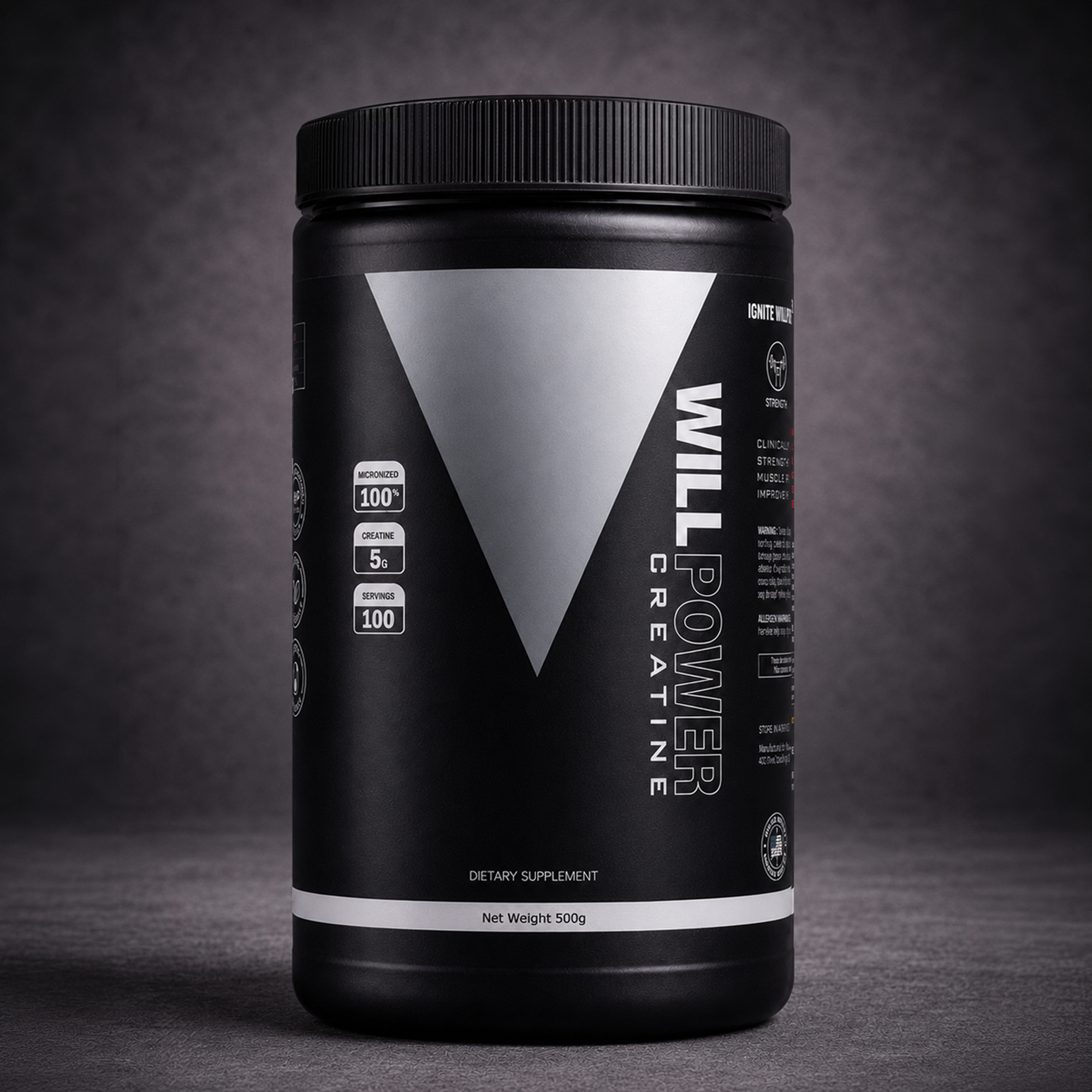

The short answer is yes — but not in the way most people think. The weight you gain from creatine is not fat. Understanding what is actually happening in your body when you start supplementing explains why that number on the scale is not something to worry about, and in most cases, is a sign the supplement is working.
What Causes the Initial Weight Increase
When you begin supplementing with creatine, your muscles pull in more water. This happens because creatine is stored in muscle tissue as phosphocreatine, and water follows creatine into the muscle cell through a process called osmosis. The result is increased intracellular fluid — water inside the muscle, not underneath the skin.
This is not bloating. It is not water retention in the traditional sense. It is your muscles becoming more hydrated, which is part of how creatine supports performance and recovery.
The initial weight increase from this process typically ranges from 1 to 3 pounds and occurs within the first week or two of supplementation. For people who use a loading phase, the increase can be slightly higher and happens faster.
Intracellular vs. Subcutaneous Water
This distinction matters. Subcutaneous water retention sits between your skin and muscle and is what gives a soft or puffy appearance. That is what people typically mean when they say something causes water retention.
Intracellular water is inside the muscle cell. It contributes to the full, dense appearance associated with well-developed muscle. It also supports cellular function, protein synthesis, and recovery. The water creatine draws into muscle tissue is intracellular, not subcutaneous. It does not cause a puffy or bloated appearance in people using standard doses of micronized creatine monohydrate.
Does Creatine Cause Fat Gain?
No. Creatine has no mechanism by which it causes fat gain. It contains no calories. It does not influence fat storage pathways. No peer-reviewed research has demonstrated a link between creatine supplementation and increased body fat.
What creatine does do is enable greater training output. More work capacity, more volume, more intensity over time. That increased training stimulus is what drives muscle growth. Any increase in lean body mass from creatine comes from improved training quality and recovery, not from the supplement itself adding tissue.
What the Research Shows on Body Composition
A study published in Nutrients found that a short creatine loading period increased lean body mass, with notable effects in female participants. Critically, the increase was in lean mass, not fat mass. The same study noted that a daily maintenance dose of 5 grams may be necessary to sustain those lean body mass benefits over time.
Separate research found that creatine monohydrate increased muscular strength in as little as two weeks during a resistance training program, and that creatine may enable greater training intensity — which drives more protein turnover and better long-term muscle adaptation. More muscle tissue does contribute to scale weight, but muscle is denser than fat and takes up less physical space. Gaining lean mass while reducing fat mass can result in a higher scale weight alongside a leaner physical appearance.
Why the Scale Is the Wrong Metric Here
Scale weight measures everything: muscle, fat, water, food in your digestive system, and bone. It does not distinguish between them. Seeing a 2-pound increase after starting creatine and concluding you gained fat is the equivalent of weighing yourself before and after drinking a glass of water and concluding the water made you fatter.
The more useful metrics when starting creatine are strength output, training performance, and body composition over time. Those numbers tell the actual story.
Who Should Expect the Most Noticeable Initial Increase
People using a loading phase (20 grams per day for 5 to 7 days) will see the water-related weight increase faster and potentially more noticeably than those using a standard daily dose of 5 grams. Both approaches reach the same end point. The loading phase just accelerates saturation.
People with larger baseline muscle mass will also store more total creatine and may see a slightly larger initial increase than those with less muscle tissue. This is expected and not a cause for concern.
Summary
Creatine does cause a modest increase in scale weight, typically 1 to 3 pounds, in the first one to two weeks of supplementation. That weight is intracellular water drawn into muscle tissue as part of how creatine is stored and used. It is not fat, it is not subcutaneous bloating, and it is not a reason to stop taking it.
Over time, creatine supports lean muscle growth by enabling higher training output and better recovery. Any additional weight gain beyond the initial water increase reflects improvements in lean body mass, which is the goal of resistance training in the first place.
The scale going up is not always bad. Context matters. With creatine, the context is clear.